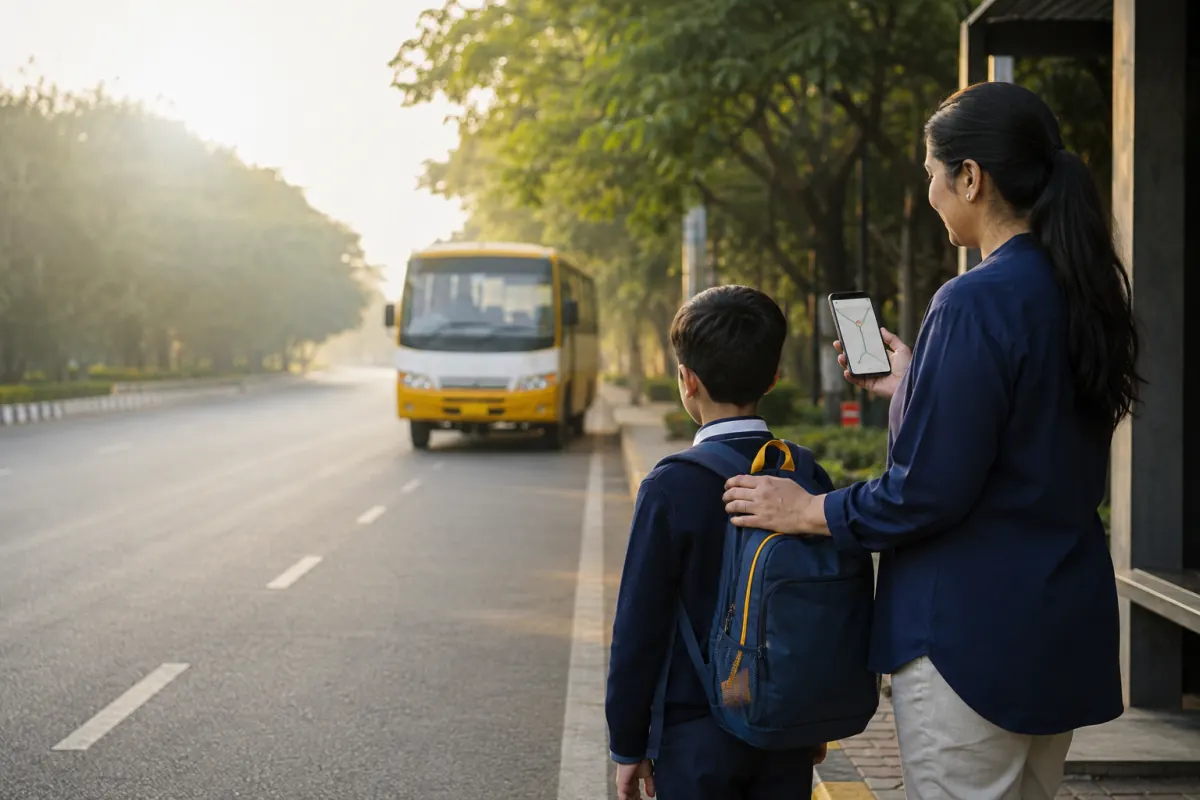
School bus tracking is often presented as a dot moving on a map. That view is useful, but it is only one part of safe transport operations. Schools also need dependable route data, assigned vehicles and staff, boarding records, useful parent updates, and a clear response when something changes.
The aim is not constant surveillance. It is shared operational awareness with appropriate access.
Build the workflow around the route
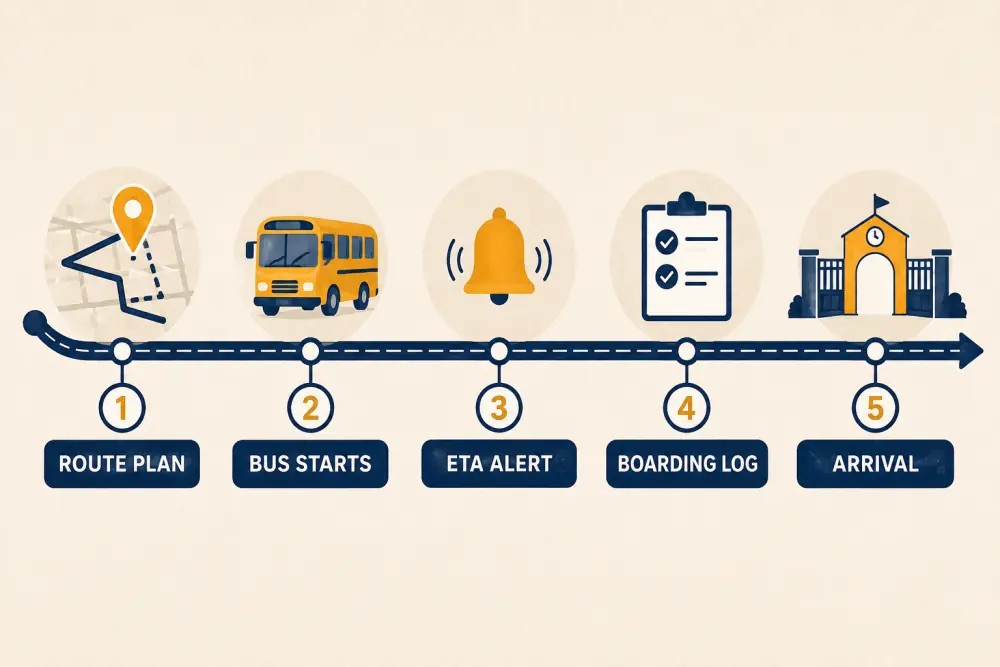
A practical daily cycle begins before the vehicle moves:
- Confirm the route, stops, assigned students, vehicle, driver, and attendant.
- Record that the trip has started with the expected team.
- Share useful estimated-arrival updates with the relevant families.
- Record boarding or drop-off events according to school policy.
- Confirm arrival and review any exceptions.
When one system connects these stages, a transport coordinator can distinguish a normal delay from a missing start event, a route deviation, or a student who was expected but did not board.
Keep route and student data current
Live location cannot compensate for an outdated route. Establish an approval process for stop changes, temporary travel arrangements, student additions, and guardian requests. Each change should have an effective date so today’s trip is not silently affected by a future plan.
Avoid informal lists maintained only by drivers or class groups. The authorised route roster should be accessible to the transport team while protecting details from unrelated users.
Design alerts for decisions
Parents rarely need continuous notifications. They need information that helps them act: the bus has started, it is approaching the stop, it is delayed beyond a meaningful threshold, or the student’s boarding status needs attention.
Configure alerts around exceptions and expected moments. Too many updates create noise; too few cause families to call the office. A school transport platform should let the school define who receives each update and avoid exposing one family’s information to another.
Define the boarding record
Schools should decide what a boarding entry means and who records it. Depending on age, policy, and available equipment, the event may be recorded by an attendant, transport coordinator, approved device, or another controlled method.
The process needs an exception path. What happens if connectivity is unavailable, a device fails, a substitute attendant is present, or a child boards at an approved alternate stop? Staff need a safe fallback and a later reconciliation step. Technology should support responsibility, not hide ambiguity.
Prepare for incidents before they happen
Document escalation contacts for breakdowns, accidents, medical concerns, severe delays, route obstructions, and a child who cannot be accounted for. Decide who contacts families, who coordinates with the vehicle team, and who records the incident.
Location access should be limited to people who need it and to the relevant journey. Review retention, account access, and staff changes. Transport data can reveal routines and locations, so it deserves the same care as other sensitive school information.
Give coordinators an exception view
A transport coordinator does not need to stare at every moving vehicle. The more useful view highlights trips that have not started, vehicles outside expected routes, overdue stops, failed devices, or unresolved boarding exceptions.
At the end of the day, review repeated delay points, route capacity, missed alerts, and manual corrections. This converts tracking data into better planning rather than leaving it as a temporary map display.
Roll out in controlled stages
Begin with one route or a small group of vehicles. Verify stop order and timings in real conditions, check guardian contacts, train drivers and attendants, and test the school’s escalation process. Invite parent feedback about whether alerts are early enough to be useful without becoming distracting.
Expand only after the route roster, devices, responsibilities, and fallback procedure are stable.
School transport readiness checklist
- Every active route has an owner and approved stop order.
- Vehicle, driver, attendant, and students are assigned before departure.
- Temporary changes have approval and effective dates.
- Families receive relevant alerts through official contact records.
- Boarding events have a clear definition and accountable recorder.
- Staff can operate safely during connectivity or device failure.
- Incident roles and emergency contacts are documented.
- Location access and retention are restricted appropriately.
- Coordinators review exceptions and recurring delays.
Good bus tracking makes a strong transport process visible; it cannot replace one. Scholva connects routes, live operations, student assignments, and school communication so teams can respond with context. Request a demonstration using one of your real routes.
Related reading: School transport route optimisation guide and What parents need from a school parent portal.