
Attendance looks like a simple present-or-absent record. In practice, it is a time-sensitive workflow involving teachers, the school office, parents, and sometimes transport or student-support teams. If an inaccurate absence alert reaches a family, confidence in every future alert falls.
A dependable workflow balances speed with a short validation and correction path.
Connect five stages
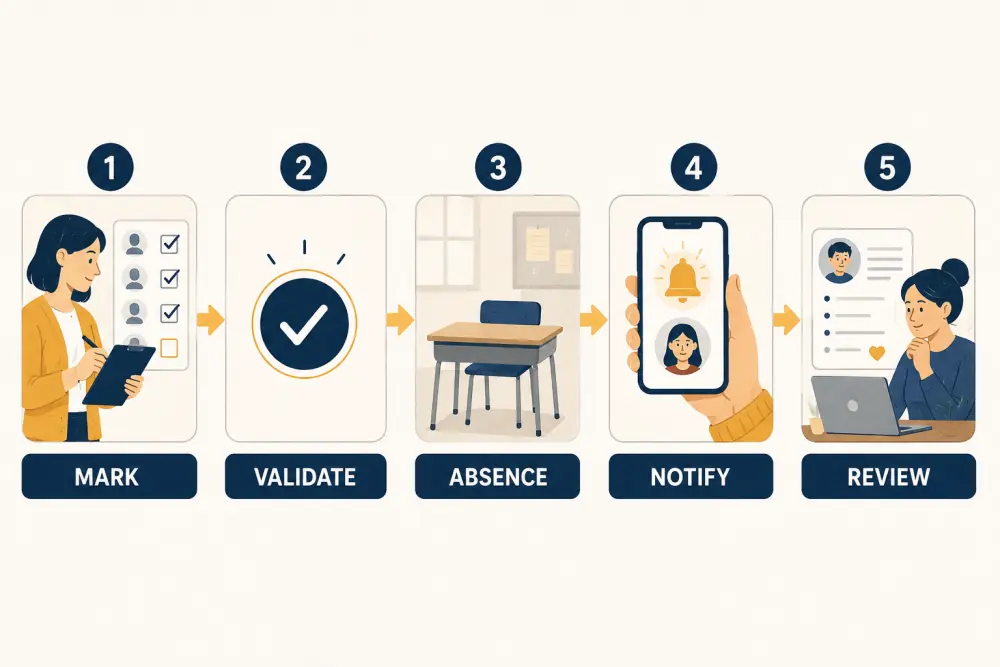
- Mark: the authorised teacher records attendance for the correct class and period.
- Validate: the system checks missing entries, impossible states, and submission time.
- Absence: a genuine absence becomes visible to the responsible school role.
- Notify: the approved guardian receives a clear, private alert.
- Review: staff handle explanations, corrections, and patterns needing support.
Each stage should have a status. A register still in progress should not be treated as a confirmed absence list.
Make classroom entry fast
Teachers need the correct roster, clear attendance states, and a way to save without navigating administrative screens. Common states may include present, absent, late, excused, and not yet marked. Use only states the school can define and act on consistently.
Set a reasonable completion window and show unsubmitted registers to a coordinator. Do not convert a missing teacher entry into student absence; those are different exceptions.
Validate before notifying
A brief validation step can prevent avoidable alarms. Check late admissions, authorised activities, examination arrangements, known leave, class transfers, and students who arrived through a delayed bus.
The school may choose immediate alerts after a reliable morning register or a short office review for younger students. The right policy depends on risk, staffing, and school operations, but it should be written and tested.
Write useful parent alerts
An absence alert should identify the child context, attendance date or period, time recorded, and an official method to respond. Keep the message factual and avoid discussing sensitive circumstances in a group channel.
Use a connected communication platform so messages go to authorised guardian contacts from current records. Delivery failure should create an exception for staff rather than disappearing silently.
Provide a correction trail
Late arrival, teacher error, approved activity, or administrative update may change the record. Authorised staff need to correct it with a reason while retaining what changed and when. If a family received an inaccurate alert, send a short correction through the same official channel.
Do not make teachers maintain a second paper or spreadsheet list just to explain digital corrections. The academic record should remain the authoritative source.
Turn patterns into support
Daily alerts address today. Weekly review can identify repeated absence, lateness, or incomplete registers. Patterns are signals for context, not automatic conclusions. A class teacher or appropriate support role should verify the record and begin a respectful conversation.
Also look for operational patterns: one class with frequent late marking, one gate causing delays, or a route that repeatedly affects arrival. The fix may be a school process rather than a student intervention.
Respect access and privacy
Teachers should see the attendance information needed for their students. Parent accounts should only reveal their authorised children. Finance, transport, and other teams should receive attendance context only where a defined workflow requires it.
Review access when staff duties change. Attendance histories are sensitive records and should not be exported casually or shared through personal messaging accounts.
Pilot the process
Test with one grade or campus. Include present, absent, late, approved leave, roster change, failed notification, and correction scenarios. Ask teachers whether entry is practical during the real classroom routine, and ask parents whether the alert is understandable.
Measure register completion time, false alerts, correction volume, delivery failures, and unresolved absence reviews. These indicators are more useful than simply counting alerts.
Attendance workflow checklist
- Current rosters reach the correct teacher.
- Missing registers are distinct from student absence.
- Attendance states have agreed definitions.
- Validation happens before parent notification.
- Alerts use verified guardian contacts and official channels.
- Delivery failures and corrections are visible.
- Changes keep an authorised reason and audit history.
- Repeated patterns trigger human, supportive review.
- Access is limited by role.
- The workflow has been tested with real exceptions.
Scholva connects attendance entry, academic records, parent access, and communication so schools can move quickly without sacrificing accuracy. Request a demonstration using your morning attendance policy.
Related reading: Early-warning signals school leaders should track and School communication app vs informal group chats.