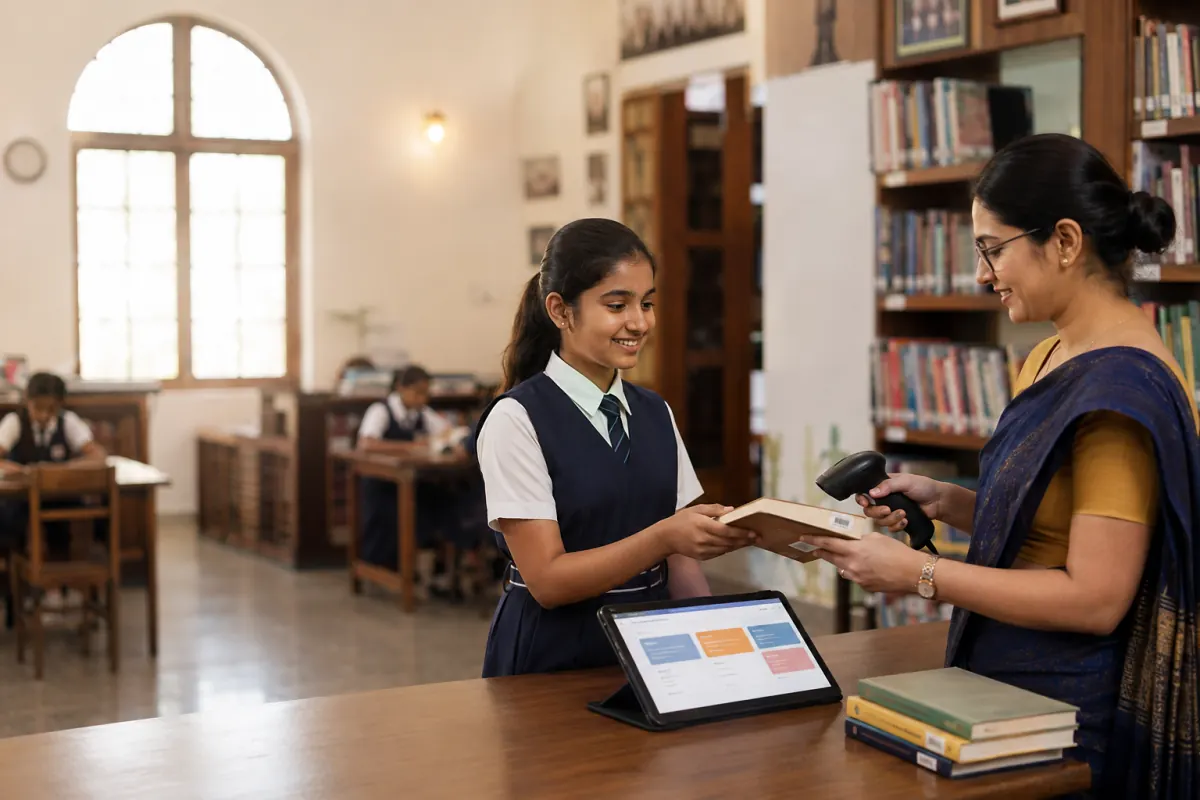
A modern library system should make books easier to discover and circulation easier to manage. The scanner is only one part of the change. Reliable catalogue data, clear borrowing rules, fair access, and a practical stock process matter just as much.
Map the full circulation loop
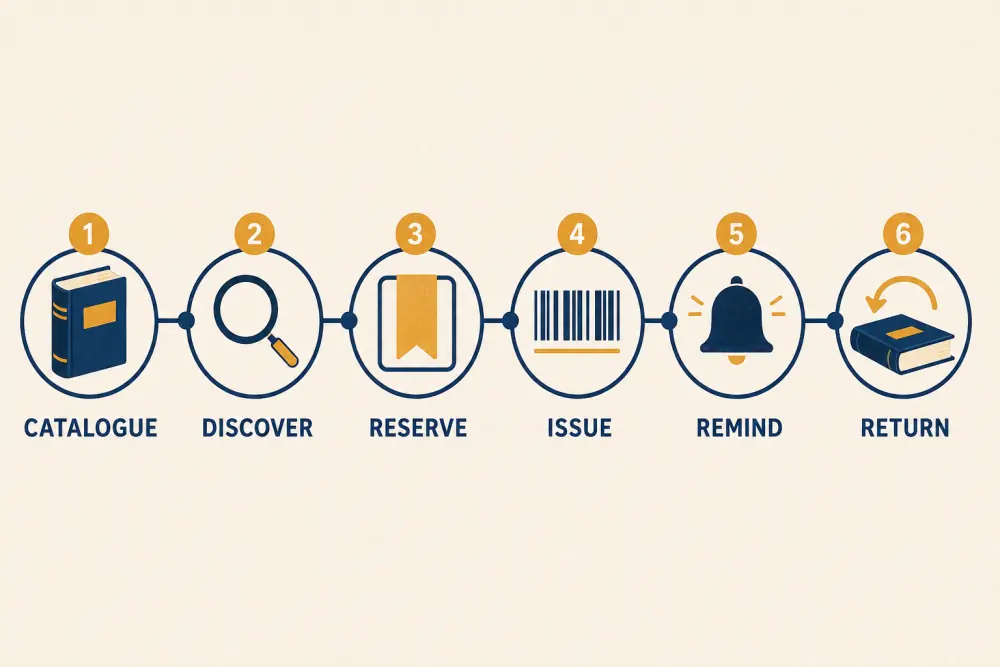
Design one connected loop: catalogue the item, help readers discover it, accept a reservation, issue the correct copy, send a useful reminder, and record its return. Each transition should update availability immediately enough for the next user to trust it.
Clean the catalogue first
Start with a physical sample. Compare shelves and registers with the digital list. Standardise titles, authors, subjects, languages, editions, accession numbers, and copy status. A title can have several physical copies, each with its own barcode and condition.
Agree how to represent reference-only material, periodicals, kits, donated books, lost items, repairs, and withdrawn stock. Avoid silently deleting old records; a clear status preserves accountability.
Importing inconsistent spreadsheets without cleanup only moves the problem to a new screen. Pilot the import, review exceptions, and reconcile totals before replacing the register.
Choose and test barcode labels
Use labels that are durable, readable, and positioned consistently without hiding important information. Test the selected scanner with the actual devices and network conditions used at the desk. Keep a manual lookup route for damaged labels and accessibility needs.
Document how new copies receive accession details and a barcode. Otherwise, the catalogue begins drifting as soon as the initial project ends.
Make discovery useful
Students and staff should be able to search by title, author, subject, language, or age-appropriate category and see whether a copy is available. Filters should reflect the collection rather than create an overly complex taxonomy.
Where appropriate, provide cover descriptions or summaries, reading level guidance, and shelf location. Review search results for different spellings and scripts used by your community.
Set fair reservation rules
Define who can reserve, queue order, collection windows, renewal rules, and limits. A reservation should hold a returned item for a reasonable period and then offer it to the next reader. Staff need a way to resolve classroom sets, accessibility accommodations, and unusual circumstances.
Do not expose a student’s borrowing history to other students. Recommendations should not reveal sensitive interests or assume that past reading defines a learner.
Send reminders that help
Reminders work best when they state the item, due date, renewal option, and what to do if the book is lost or already returned. Schedule them before and after the due date rather than sending frequent generic notices.
Choose student, guardian, or staff channels according to age and policy. Avoid turning every overdue item into a disciplinary issue. Libraries should remove barriers to reading while keeping shared resources available.
Connect notices to a well-designed parent self-service experience so families can find the current status without calling the office.
Run dependable stock checks
Use shelf-by-shelf scanning to identify items that are present, missing, misplaced, damaged, or recorded under the wrong status. Freeze or clearly manage circulation during the relevant section of a stock check so transactions do not create false exceptions.
Review losses by category and location, but do not use a single loss rate to blame readers or staff. Examine labelling, shelving, return points, supervision, and record quality.
Track service, not only stock
Useful measures include circulation by collection, reservation fulfilment time, overdue patterns, search terms with no result, inactive sections, damaged items, and catalogue accuracy. Interpret them alongside curriculum needs and librarian knowledge.
A high circulation total is not the only aim. Breadth of access, reading engagement, relevant acquisitions, and a welcoming service also matter.
Rollout checklist
- Reconcile the physical collection and catalogue.
- Give every copy a unique, tested barcode.
- Define issue, renewal, reservation, reminder, and loss policies.
- Train staff on exceptions and manual fallback.
- Protect borrowing histories with role-based access.
- Pilot one collection before migrating everything.
- Schedule stock checks and catalogue maintenance.
- Review discovery, access, and service measures regularly.
Scholva can connect library management with the institution’s wider student and communication records. To review the workflow using your collection and policies, request a demonstration.
Related reading: Digitising school inventory and asset tracking and School communication apps versus WhatsApp groups.