Teacher reviewing online assessment results and focusing on feedback

How Online Assessments Can Reduce Teacher Grading Workload

Online assessment does not remove teachers from evaluation. Used well, it removes repetitive scoring, result compilation, and copying so teachers can spend more time reviewing misconceptions and giving useful feedback. The greatest savings come from designing the assessment workflow—not simply moving the same paper onto a screen. Decide what should be automated Objective items with an unambiguous answer—such as carefully written multiple choice, matching, or numeric responses with defined tolerance—can often be scored automatically. Essays, working steps, creative responses, oral work, and many practical tasks need human judgement. ...

September 4, 2026 · 4 min · Scholva
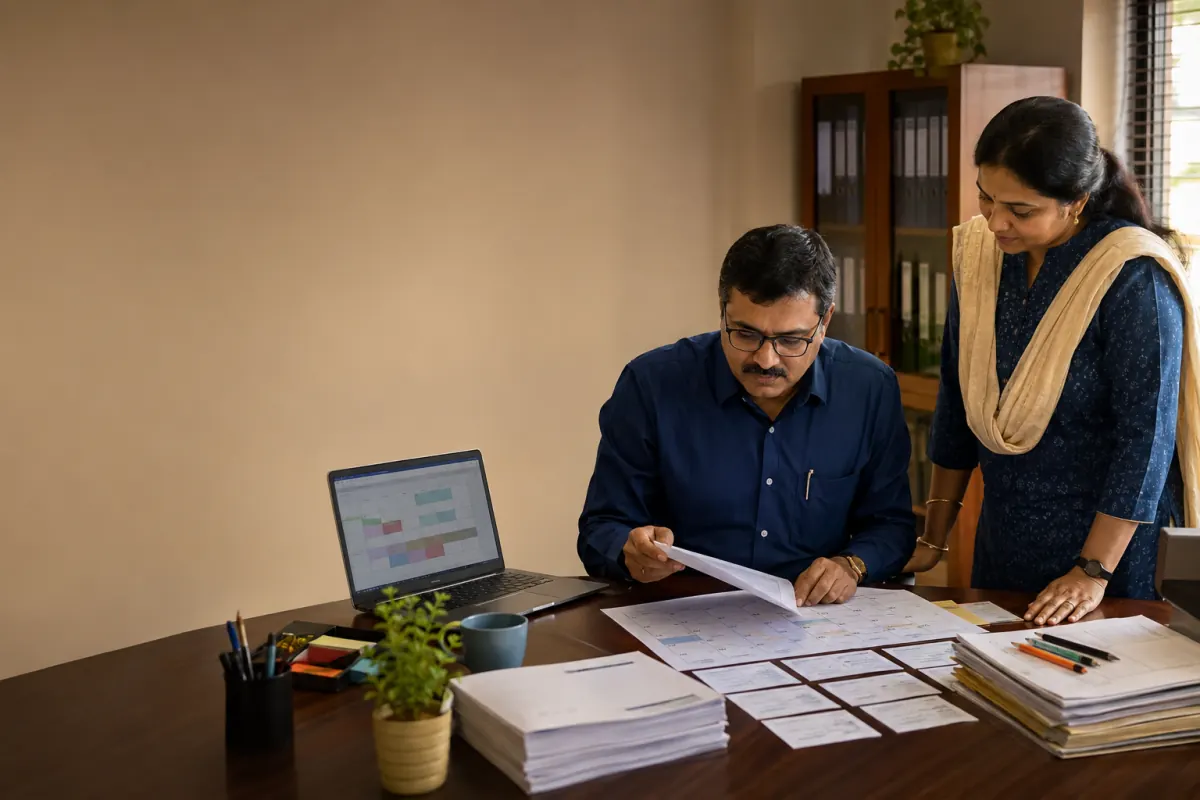
Academic coordinators building a balanced school timetable

How to Build a Conflict-Free School Timetable

A school timetable is a compact model of the institution. It must fit curriculum requirements, teacher availability, rooms, practical periods, breaks, assemblies, and local policies into a finite week. A timetable can have no obvious double booking and still be difficult to teach or learn from. The best process separates accurate inputs, explicit rules, conflict validation, and human review. Collect the constraints first Begin with four dependable data sets: ...

September 4, 2026 · 4 min · Scholva
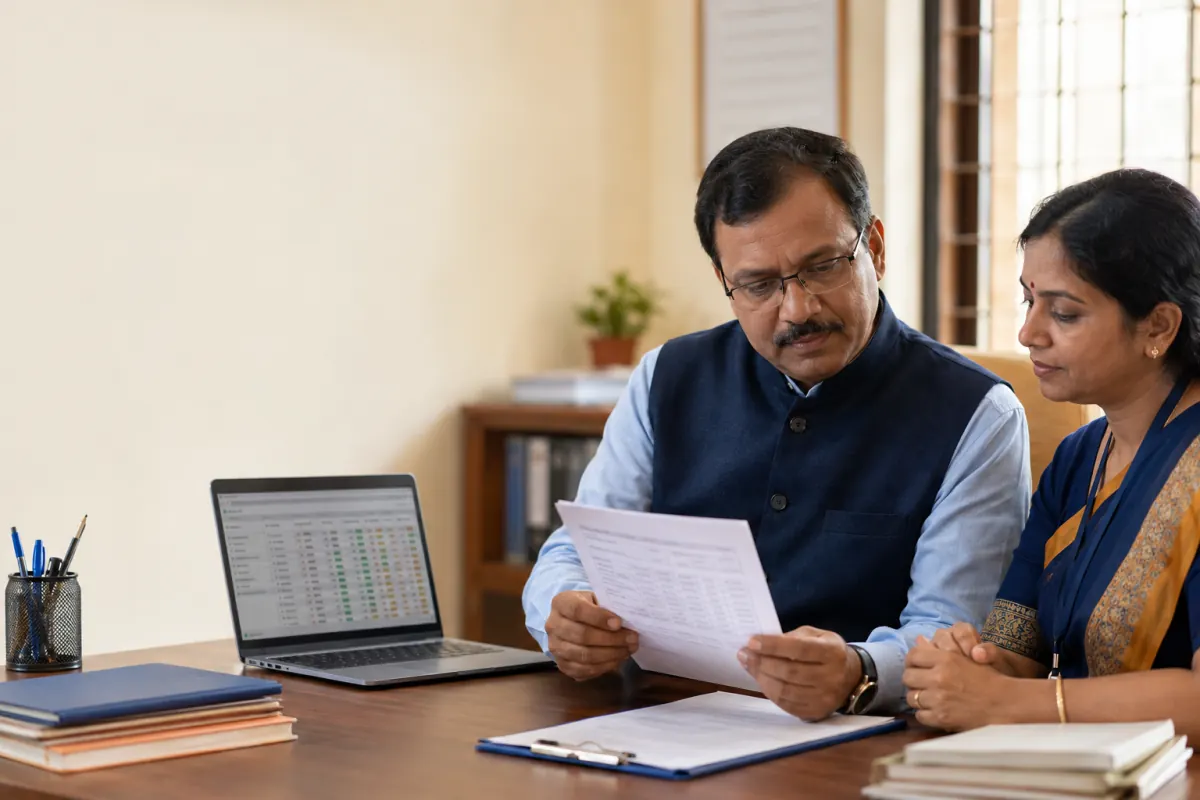
Academic administrators verifying a school report card

How to Generate School Report Cards Without Spreadsheet Errors

Spreadsheet report cards often depend on copied marks, hidden formulas, manual grade lookups, and one person who knows which file is current. The process may work for years—until a row shifts, a formula misses a learner, or an outdated version is published. Reliable report cards come from a controlled workflow with visible checks and approvals. Separate the five stages Data: collect complete, authorised marks and required student information. Calculate: apply approved totals, weightage, grades, and rounding rules. Review: surface missing values, exceptions, and unusual outcomes. Approve: give authorised academic roles a final controlled sign-off. Publish: release the approved version to the correct family or student. Do not collapse these into one “generate” button. Each stage protects a different kind of accuracy. ...

September 4, 2026 · 4 min · Scholva
School examination coordinators reviewing a complete exam plan

How to Manage the Complete School Examination Cycle

Examinations bring together calendars, subjects, rooms, students, teachers, papers, marks, report formats, and parent communication. When each part is maintained in a different file, even a small change can produce conflicting versions. Managing the examination cycle well means designing one controlled flow from planning to academic action. Treat examinations as a lifecycle The five broad stages are connected: Plan: define the assessment, eligible students, subjects, weightage, rules, and owners. Schedule: assign dates, times, rooms, invigilators, and any accommodations. Assess: deliver the examination with controlled papers, rosters, and attendance. Grade: enter marks, moderate where required, and resolve exceptions. Report: publish approved results and use the evidence to plan support. A change in one stage should be visible to the next. Rescheduling a subject, for example, must update the authoritative timetable and related communication—not only one spreadsheet. ...

September 4, 2026 · 4 min · Scholva
Teachers reviewing a topic heatmap to plan reteaching

How to Use Topic-Level Assessment Analytics to Plan Reteaching

An overall assessment score tells a teacher how a learner performed across the paper. It rarely explains what to teach next. Topic-level analytics become useful when questions are mapped carefully, responses are interpreted with context, and the result leads to a specific instructional action. The goal is a short evidence loop, not a more complicated dashboard. Build the loop from questions to action The workflow has six parts: ...

September 4, 2026 · 4 min · Scholva
Teacher recording classroom attendance before a parent alert

The School Attendance Workflow: From Classroom to Parent Alert

Attendance looks like a simple present-or-absent record. In practice, it is a time-sensitive workflow involving teachers, the school office, parents, and sometimes transport or student-support teams. If an inaccurate absence alert reaches a family, confidence in every future alert falls. A dependable workflow balances speed with a short validation and correction path. Connect five stages Mark: the authorised teacher records attendance for the correct class and period. Validate: the system checks missing entries, impossible states, and submission time. Absence: a genuine absence becomes visible to the responsible school role. Notify: the approved guardian receives a clear, private alert. Review: staff handle explanations, corrections, and patterns needing support. Each stage should have a status. A register still in progress should not be treated as a confirmed absence list. ...

September 4, 2026 · 4 min · Scholva